The Ultimate Setup Guide for Your Ugreen Nexode Power Bank 20000Mah 165W
Introduction
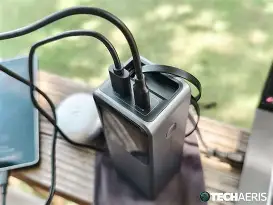
The Ugreen Nexode Power Bank 20000Mah 165W is designed for people who need serious portable power: frequent travelers, remote workers, content creators, and anyone who wants to keep multiple devices topped up without juggling chargers. This guide walks through what the Nexode offers, how to set it up for everyday life, and practical tips to maximize safety, compatibility, and longevity. It focuses on real-world use cases and buyer concerns so readers can decide whether the Nexode fits their routine and, if so, how to integrate it into daily workflows.
Product overview and analysis
The Nexode 20000Mah 165W positions itself as a high-capacity, high-output power bank. At a glance, its headline specs are its 20,000 mAh capacity and a total output capability marketed at up to 165W. That combination targets users who want to charge laptops and high-power devices along with phones and tablets.
Key selling points typically emphasized in this class of product include:
- High wattage output: Allows charging of power-hungry laptops and rapid charging of modern phones.
- Multi-device support: Ability to power or charge several devices at once without dramatic drops in speed for the most important device.
- Compact capacity: 20,000 mAh is a balance between portability and substantial energy reserve.
- Safety and smart charging: Protections against overcurrent, overvoltage, short circuits and thermal management.
Technologies often included in contemporary high-power packs—like gallium nitride (GaN) components for efficiency and smaller size, Power Delivery (PD) standards for compatible USB-C fast charging, and intelligent power allocation—are central to delivering that 165W experience. Buyers should confirm the exact port configuration and supported PD profiles (e.g., PD 3.0 or PD 3.1) for their intended devices.
What buyers typically care about
- Real usable capacity: Marketing mAh numbers differ from usable watt-hours; conversion and real-world efficiency losses mean actual device charges are lower than raw mAh suggests.
- Maximum single-port vs. combined output: Will the bank give the advertised wattage to one device, or is it the combined ceiling across ports?
- Port types and cable requirements: USB-C PD ports, USB-A legacy ports, and whether high‑amperage, e‑marked cables are required to reach top speeds.
- Weight and form factor: Is the bank comfortable in a carry-on or daily bag?
- Safety and certifications: Overheat protection, cell quality, and airline compliance are important for peace of mind.
Real-world use cases
Understanding how the Nexode performs in everyday scenarios helps determine whether it is the right choice:
1. Remote worker / digital nomad
For someone working from cafes, co-working spaces, or trains, a high-output bank that can run a laptop (for example, a 13–16 inch laptop that accepts USB-C PD) and top up a phone is invaluable. The Nexode's high wattage makes it viable to charge a laptop while running power-hungry apps for video calls, editing, or compiling code.
2. Content creator or photographer
Photographers on location often need to recharge cameras, gimbals, portable monitors, and phones. A single compact power bank capable of delivering laptop-class power reduces the number of batteries and chargers to manage.
3. Frequent traveler
Airline rules typically allow power banks under 100 Wh in carry-on luggage without airline approval. The 20,000 mAh rating at a nominal 3.7V equals roughly 74 Wh (20,000 mAh × 3.7V ÷ 1000 ≈ 74 Wh), which puts the Nexode under the usual 100 Wh limit—making it a convenient option for international travel. Travelers should always carry it in hand luggage and check airline policies for any country-specific rules.
4. Emergency backup
A compact, high-capacity bank is useful for emergencies: keeping phones on for communications, powering portable lights, or running small routers for connectivity during short outages.
Step-by-step setup and getting started
Setting up the Nexode for optimal performance and safety is straightforward. Follow these steps to get started.
Shop the latest Mobile Phones picks on Amazon.
See Deals →- Inspect the kit: Remove packaging and verify included accessories (USB-C cable, documentation). Confirm the presence and condition of the power bank and any included cable(s).
- Read the manual: Scan manufacturer instructions for port labeling, supported PD profiles, and warnings. The manual clarifies charge-in (input) vs. charge-out (output) ports and any limitations while charging and discharging simultaneously.
- Charge the power bank fully before first use: Use a compatible USB-C PD charger. If the unit supports high-wattage input, use a charger that matches the bank's input spec to reduce refill time.
- Choose the right cables: For high-wattage charging, use USB-C cables rated for high current and PD (look for e-marker chips and 5A/100W or higher ratings). Lower-quality cables may limit power or become warm.
- Decide port priorities: When connecting multiple devices, plug the highest-priority device into the port that supports the highest single-port output (this will usually be a USB-C labeled for PD).
- Monitor temperatures: During the first few charge cycles, note the temperature of the bank. A warm device under heavy load is normal; persistent, excessive heat warrants reduced load or contacting support.
Performance and charging scenarios
To understand how the Nexode behaves, consider typical multi-device charging scenarios and what to expect.
Single high-power device
When powering a laptop that accepts PD charging, the bank should prioritize the connected device and deliver the highest supported wattage up to its single-port limit. For laptops requiring 60–100W, the Nexode’s high-wattage capability makes it a convenient solution for short to medium work sessions away from mains power.
Phone + laptop simultaneous charging
If the total wattage is shared across ports, the bank will divide power according to its smart charging logic. Common practice is to allocate enough power to the laptop to sustain or slowly charge it while topping the phone at its fast-charge rate. Users should expect slightly longer fill times for all devices when multiple devices are drawing power.
Charging the power bank itself
High-wattage input support shortens recharge time. For example, a PD charger that matches the bank's input spec will res…Safety, airline rules, and maintenance
Safety and regulatory considerations matter when buying and using high-capacity power banks.
Air travel and regulatory compliance
Most airlines permit power banks up to 100 Wh in carry-on baggage without prior approval. Using the standard conversion (mAh × 3.7V ÷ 1000), a 20,000 mAh pack equals about 74 Wh, which usually meets carry-on requirements. It should never be placed in checked luggage. Always confirm with the airline for country-specific changes and never attempt to bypass rules for larger battery capacities.
Thermal and electrical safety
- Keep the unit away from extreme heat or moisture. Do not leave the bank in a hot car or direct sunlight for extended periods.
- Use certified cables and chargers to prevent overcurrent or voltage spikes. Cheap or damaged cables can cause heating and reduce performance.
- Do not attempt to open or repair the power bank. If it shows signs of swelling, leaking, or severe overheating, stop using it and contact customer service for guidance.
Long-term storage and cycle care
For storage, keep the bank charged to about 40–60% rather than full. Store in a cool, dry place and recharge it every 3–6 months to maintain cell health. Minimize deep discharges frequently; lithium-based cells last longer when cycles are moderate and not repeatedly drained to zero.
Pros & Cons
- Pros
- High output makes it suitable for charging laptops and power-hungry devices on the go.
- 20,000 mAh capacity balances portability and usable energy.
- Multi-device charging reduces the need to carry multiple chargers.
- Typically features modern safety protections and smart power allocation.
- Cons
- Higher-wattage operation requires high-quality, e-marked cables to access top speeds.
- Charging at maximum wattage generates heat and may shorten battery longevity if used constantly at peak load.
- Real usable capacity is lower than the mAh rating after conversion and inefficiencies are considered.
- Size and weight, while compact for the power class, are still larger than small phone-only packs.
Comparison table
The table below compares the Nexode to two commonly referenced alternatives in the high-capacity, multi-port power bank category. These comparisons are intended to highlight relative strengths and typical trade-offs.
| Model | Battery (mAh / ~Wh) | Max Output (W) | Key ports | Best for |
|---|---|---|---|---|
| Ugreen Nexode 20000Mah 165W | 20,000 mAh / ~74 Wh | Up to 165W (combined) | High-wattage USB-C PD ports, usually multi-port mix | Users who need laptop-level power in a compact pack |
| Anker (high-power models) | ~20,000–24,000 mAh / ~74–89 Wh | Up to ~140W (varies by model) | USB-C PD, some models include multiple USB-C + USB-A | Broad compatibility and strong brand support |
| Zendure SuperTank / similar | ~20,000–27,000 mAh / ~74–100 Wh | Up to ~100W single-port (some models offer higher combined) | USB-C PD ports, high-capacity cells | Users prioritizing capacity and rugged design |
Buying guide: what to check before purchasing
When choosing a high-power bank like the Nexode, focus on compatibility, safety, and practical performance rather than marketing numbers alone.
Discover deals on Mobile Phones — updated daily.
Browse Now →1. Confirm device compatibility
Check the charging needs of primary devices. If a laptop requires 100W, verify the power bank's single-port capability supports that. For phones, ensure the bank supports fast-charge protocols commonly used by the device (PD, PPS, etc.).
2. Check port configuration and power distribution
Some power banks advertise a high combined wattage but limit single-port output. Choose a unit that provides sufficient single-port power for the most demanding device or read the distribution logic so the bank supplies priority power correctly during multi-device usage.
3. Cable and charger quality
To realize high wattage speeds, buy certified USB-C cables with e-marker chips rated for the required amperage (commonly 5A for high-power). If planning to recharge the power bank quickly, use a PD charger that matches the bank’s input rating.
4. Weight and portability
Decide whether the pack will be daily carry or occasional travel gear. While 20,000 mAh is relatively portable, heavier packs can add noticeable bulk to a commuter bag.
5. Safety certifications and warranty
Look for safety certifications, clear manufacturer warranty, and responsive customer support. Choose a product with built-in protections and a reasonable return path if faults appear.
6. Real-world reviews
Seek user reviews that discuss heat under load, real recharge times, performance across multiple devices, and long-term reliability. Real use reports often reveal differences between theoretical specs and day-to-day behavior.
Conclusion
The Ugreen Nexode Power Bank 20000Mah 165W aims to bridge the gap between phone-level portability and laptop-level power. For people who need to run or top up laptops, a phone, and accessories on the move, this class of power bank can drastically simplify charging routines. Key to success is matching the unit to actual device requirements, using appropriate cables and chargers, and following safe handling and storage practices. When set up correctly, the Nexode can be a reliable travel companion and a practical solution for professionals and creators who depend on uninterrupted power away from mains outlets.