Don't Buy the Nzxt Function Elite Mini Tkl Until You Read This Full Analysis
Introduction
The NZXT Function Elite Mini TKL has arrived at a time when compact mechanical keyboards are more popular than ever. Its name promises a blend of premium feel and focused functionality, but potential buyers should weigh several nuanced trade-offs before pulling the trigger. This article presents a comprehensive editorial analysis aimed at readers who care about typing feel, gaming performance, durability, and value. It highlights what the keyboard does well, where it falls short, and which buyers are likely to be happiest with it.
At-a-glance summary
In short: the NZXT Function Elite Mini TKL is a solid compact mechanical keyboard that aims to deliver a clean aesthetic, reliable mechanical switches, and sensible ergonomics for both gaming and productivity. However, real-world considerations—software maturity, acoustics, long-term service, and layout compromises—can substantially change whether it is the best purchase for a particular user. Read on for a deep dive so buyers can decide with clarity.
Detailed product review and analysis
Design and build quality
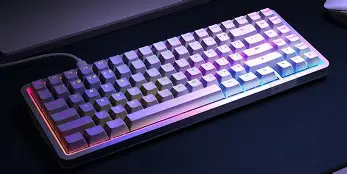
The Function Elite Mini TKL uses a tenkeyless layout to free up desk space while retaining essential navigation keys. The chassis design favors simplicity: clean lines, modest bezels, and a low-profile aesthetic that suits modern workstations. For buyers who prioritize a minimal look on camera for streaming or who use the keyboard alongside large mice on limited desk space, the compact footprint is a major benefit.
Materials and construction influence both feel and longevity. The keyboard typically balances a plastic outer shell with a heavier internal plate or frame to avoid flex. Buyers who prefer the reassuring heft and rigidity of aluminum top plates should confirm the specific edition they are buying, because small variants in construction can change the tactile and acoustic characteristics considerably.
Switch options and typing experience
One of the most important factors for many buyers is the switch choice: linear, tactile, or clicky. The Function Elite Mini TKL is positioned as a mechanical keyboard with user-oriented switch options. Typing performance depends on the switch brand and mount (soldered vs. hot-swappable), keycap profile, and stabilizer tuning.
Real-world typing impressions matter more than raw specs: stock stabilizers that are not well-lubed can rattle on spacebar and large keys, and thinner ABS keycaps will produce a different sound signature than thicker PBT sets. Buyers who care about sound and feel should budget for a brief period of tweaking—stabilizer lubrication, switch swaps, and sometimes keycap upgrades—to reach an ideal experience.
Software and customization
Software is where many modern keyboards differentiate themselves. Custom keymapping, macro programming, and RGB lighting control are valuable to gamers, streamers, and power users who rely on application-specific profiles. A well-designed, regularly updated configuration utility makes the keyboard far more useful; conversely, clunky or buggy software reduces long-term satisfaction.
For the Function Elite Mini TKL, prospective owners should evaluate the maturity of the configuration tool: Does it reliably save profiles to on-board memory? Can it remap layers without requiring background processes? Are RGB effects smooth and sync-capable with other peripherals? These practical questions will affect daily use on both Windows and macOS.
Connectivity and ergonomics
TKL keyboards are inherently ergonomic for desk real estate, but wrist angle, keycap profile, and included feet make a difference. A slightly inclined typing angle can reduce wrist strain for long writing sessions; a flat profile might benefit fast-paced gaming where finger agility matters. Buyers who alternate between long typing sessions and gaming sessions should prioritize an adjustable angle and comfortable keycaps.
On connectivity, a detachable USB-C cable is a near-standard convenience that simplifies travel and cable management. Wireless variants are prized by some buyers for tidier desks, but they often trade off latency or battery life. Confirm whether a model is wired-only or offers wireless modes if that is important to the buyer’s setup.
Looking for the best Laptops & Computers deals on Amazon?
See Deals →Gaming performance
For gamers, the keyboard must offer responsive switches, dependable rollover (N-key rollover preferred), and minimal software- or firmware-induced input lag. The Function Elite Mini TKL’s compact layout helps with rapid mouse movement by leaving more desk space, which is a real-world advantage for players of first-person shooters and competitive titles. Additionally, the absence of a numpad reduces accidental palm contact and can speed transitions during intensive play.
However, competitive players will want to validate polling rate options and ensure macros or on-board layers do not interfere with gameplay. Tournament players often avoid keyboards that require proprietary drivers running in the background due to competitions’ software policies—so on-board profile storage and driverless functionality are pragmatic advantages.
Acoustics and noise
Sound matters to content creators and those working in shared spaces. The stock acoustic profile is shaped by switch type, stabilizers, case damping, and keycaps. Some units produce a satisfying, muted thock while others can sound pingy or hollow. Buyers sensitive to noise should test the keyboard in a store or check community sound tests and threads for typical acoustic impressions, especially if the keyboard is intended for open-plan offices or live streams.
Durability and service
Mechanical keyboards are long-term investments. Warranty coverage, availability of replacement parts (keycaps, cables, switches), and the community around modding the keyboard affect longevity. A product backed by transparent warranty terms and accessible customer support reduces risk; conversely, limited spare parts or poor support increases the total cost of ownership if repairs or replacements are necessary down the road.
Pros & Cons
- Pros
- Compact tenkeyless footprint frees desk space and improves mouse range for gamers
- Typ…
Feature Nzxt Function Elite Mini Tkl (typical) Generic Compact TKL High-end Enthusiast TKL Layout Tenkeyless (87 keys) Tenkeyless or 75% variants Tenkeyless with flexible layouts Switch Options Pre-configured mechanical options (linear/tactile/clicky) Basic switch choices, often lower-cost brands Premium switches; often hot-swappable Build Materials Plastic chassis with reinforced plate (varies) Lightweight plastics Aluminum top plates, stronger damping Software Vendor software for macros/lighting (quality varies) Minimal or no software Mature, community-friendly firmware and advanced tooling Acoustics Balanced stock tuning; potential for improvement Often thin and pingy Optimized for low-resonance and pleasing sound Price Range Mid-range Budget Higher-end (premium pricing) Buying guide: what to consider before buying
1. Define the primary use case
Is the keyboard primarily for competitive gaming, content creation, office typing, or mixed use? Competitive gamers prioritize low latency and minimal software dependencies. Writers and coders often prioritize typing comfort, keycap profile, and an adjustable angle. Streamers may value appearance and on-the-fly macro controls. Clarifying primary use helps determine which compromises—layout, weight, software—are acceptable.
2. Decide on switch type and modability
Choose a switch family that aligns with typing preference: linear for smooth actuation, tactile for a subtle bump, or clicky for audible feedback. If possible, prefer hot-swappable models to experiment with switches without soldering. If the Function Elite Mini TKL is not hot-swappable, buyers should be comfortable with the factory switch choice or ready to arrange a more involved modification.
3. Evaluate software and on-board memory
Test or research the vendor's software responsiveness and reliability. For users who move between systems or who may enter competitive environments, on-board memory for profiles is a valuable feature that preserves custom layouts without needing software running in the background.
4. Consider ergonomics and long typing sessions
Look for adjustable feet, comfortable keycap profiles (e.g., sculpted profiles like SA vs. low-profile Cherry), and wrist positioning. If long typing sessions are common, opt for a setup that minimizes ulnar deviation and wrist strain.
5. Check acoustic needs and office environment
If the keyboard will be used in shared spaces or on streams, assess its noise level. Opt for quieter switch options, damped cases, and well-tuned stabilizers. Conversely, if audible feedback is preferred, select louder switch types and thicker keycaps.
Discover deals on Laptops & Computers — updated daily.
Browse Now →6. Future-proofing: keycap compatibility and spare parts
Confirm whether keycaps use standard layouts and are easy to replace. Check whether the vendor or community offers spare cables, keycap sets, and replacement switches. A thriving user community around a model makes modding and repairs easier.
7. Test before committing
Whenever possible, try the keyboard in person, or audition sound samples and community reviews that show real-world usage rather than marketing shots. Many retailers or local communities have switch testers or demo units that give a better sense of feel and sound than technical specs alone.
Common buyer questions answered
Is the compact layout a compromise?
Compact layouts free up desk space and often improve mouse ergonomics, but they remove the numpad. For users who frequently enter numbers, an external numpad or a different keyboard layout may be necessary. The decision should be based on daily workflow rather than aesthetic preference alone.
Will I need to mod the keyboard to get the best experience?
Not necessarily, but many mechanical keyboard owners find modest tweaks—stabilizer lubrication, switch and keycap swaps—deliver disproportionately better results. If the buyer expects a perfectly tuned experience straight from the box, check community feedback to see whether the model’s stock tuning meets that expectation.
How future-proof is the purchase?
Future-proofing depends on software support, replaceable components, and warranty. A keyboard with on-board profiles, a detachable cable standard (USB-C), and a supportive vendor or community ecosystem offers the best long-term value.
Conclusion
The NZXT Function Elite Mini TKL can be an excellent choice for people who prioritize a compact footprint, solid baseline performance, and a modern aesthetic. Its strengths lie in desk-space efficiency, a generally balanced typing experience, and the flexibility to serve both gaming and productivity roles. That said, the "right" decision depends on individual priorities: whether one values out-of-the-box acoustics, needs a numpad for work, prefers wireless freedom, or demands an enthusiast-level build out of the box.
Buyers should research software maturity, confirm switch and keycap specifications for the included variant, and—if possible—test one in person. Those comfortable with light modifications or confident in their preferred switch type will likely find the Function Elite Mini TKL a worthwhile mid-range pick. For users who demand premium materials, ultra-quiet acoustics, or a full numeric keypad, a different model may better serve those needs.
Ultimately, don't let the compact form factor or brand name decide the purchase. Evaluate the real-world trade-offs described in this analysis, match them to daily habits and workflows, and choose the keyboard that aligns with practical needs rather than impulse. Making that assessment before buying ensures a satisfying, long-term desk companion rather than an avoidable regret.