Biggest Victrix Pro Bfg Reloaded Buying Mistakes (And How to Avoid Them)
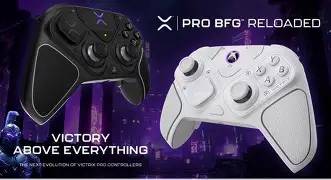
The Victrix Pro BFG Reloaded is often discussed among competitive fighting game enthusiasts and serious hobbyists for its premium build and tournament-ready features. However, buyers frequently make avoidable mistakes during the shopping process that lead to disappointment, incompatibility, or unnecessary extra expense. This article examines the most common pitfalls people encounter when considering the Victrix Pro BFG Reloaded, provides an honest analysis of the product’s strengths and weaknesses, and gives a practical buying guide so readers can make an informed decision tailored to their real-world use cases.
Introduction: Why this guide matters
Fighting game peripherals like the Victrix Pro BFG Reloaded are a different purchase category from regular controllers. Buyers care about input fidelity, durability, mod-ability, weight and portability, platform compatibility, and service or warranty support. Making the wrong assumptions—about what’s included in the box, what parts are standard, or how a product behaves in tournament conditions—can turn a seemingly perfect purchase into a frustrating experience. This guide helps prospective buyers avoid those missteps.
Product review and in-depth analysis
At its core, the Victrix Pro BFG Reloaded positions itself as a high-end fight stick designed with competitive players in mind. The following sections break down the product where it affects buying decisions most: design and build, performance, customization options, software/firmware, and suitability for different use cases.
Design and build quality
The Victrix Pro BFG Reloaded has historically emphasized a solid, no-nonsense enclosure with premium materials. For buyers who value longevity, the use of metal and high-quality plastics in the chassis reduces flex and improves stability during aggressive play. The layout is typically based on arcade standards with full-size buttons and a sturdy joystick mount, which appeals to players who want the “cabinet” feeling at home.
However, buyers should confirm what specific components are installed out of the box—joystick type, button brand, and internal wiring—because different batches or regional versions may ship with different configurations. That variability influences feel and upgrade decisions.
Performance: latency, feel, and reliability
Input latency and consistent micro-actuation are non-negotiables for competitive use. The Victrix Pro BFG Reloaded is often praised for responsive USB-C connectivity and reliable input polling, which translates to predictable performance in fast-paced games. The feel—how the stick and buttons respond under rapid presses and directional inputs—is subjective but critical. Some players prefer a stiffer joystick and clicky buttons, others a smoother gate and softer microswitches.
Real-world testing scenarios that matter to buyers include: long sessions (where fatigue and ergonomics show), repeated 8-way inputs for combos, and rapid button combos typical in high-level matches. Reading community feedback on consistency across extended usage helps set expectations.
Customization and mod-ability
One of the key attractions of higher-end fight sticks is the ability to customize. The Reloaded model emphasizes a modular approach—top panels that can be swapped, hot-swap or soldered PCBs, and compatibility with common arcade parts. For buyers who plan to swap joysticks or buttons (for example, switching to Sanwa or Seimitsu components), the true value is in how easily the unit opens, how standard the wiring is, and whether adapters are needed.
Mod-friendliness also affects the resale value: a well-documented, easy-to-mod unit is generally more attractive on the used market.
Software and firmware
Firmware stability and companion software are frequently overlooked by buyers. Some advanced features—custom button mapping, macro assignments, and LED control—require a stable driver suite or onboard firmware. Buyers should verify if the Victrix Pro BFG Reloaded supports firmware updates, whether those updates are documented, and how responsive the manufacturer is to bug fixes. Community-created firmware or support forums can also be a good indicator of longevity.
Real-world use cases
Different buyers will approach the Victrix Pro BFG Reloaded with very different priorities:
- Tournament competitors need reliability, low latency, and a comfortable layout for long sets.
- Streamers and content creators prioritize aesthetics, quiet operation during streaming, and visual customization options.
- Casual players want plug-and-play simplicity and may prefer something lighter and less expensive.
- Modders and restorers look for ease of access to internals and compatibility with off-the-shelf arcade parts.
Understanding which camp a buyer belongs to prevents mismatched expectations.
Pros & Cons
- Pros:
- High-quality chassis and premium feel for serious play
- Generally responsive inputs and low-latency USB connection
- Designed with competitive players in mind—suitable for tournaments
- Mod-friendly design (top panel access, standard mounting in many cases)
- Solid resale value if maintained
- Cons:
- Potential variability in included components across regions or runs
- Heavier and less portable than entry-level sticks—may require a case
- Firmware or software update paths can be inconsistent depending on manufacturer support
- Higher cost compared to simple USB pads or budget sticks
- Some buyers report minor compatibility quirks with certain PC setups or consoles that require driver tweaks
Comparison: Victrix Pro Bfg Reloaded vs. Common Alternatives
| Model | Target Buyer | Build Quality | Mod-friendliness | Platform Compatibility | Notes |
|---|---|---|---|---|---|
| Victrix Pro Bfg Reloaded | Competitive players, modders | Premium, sturdy chassis | High—designed for upgrades | PC & consoles (confirm specific models) | Good balance of tournament features and mod potential |
| Hori Real Arcade Pro (series) | Casual & tournament entrants | Solid, often plastic-forward | Moderate—some models are easy to mod | Console-first with PC compatibility | Lower cost, widely available replacement parts |
| Qanba Obsidian | Serious players who value aesthetics | Metal/wood accents, high build quality | High—accessible internals | PC & consoles | Often comes with premium joystick/buttons pre-installed |
| Razer Panthera | Competitive players & mainstream buyers | Robust, tournament-grade | High—designed for user swaps | Console-focused, with PC support | Large community for mods and parts |
Biggest Buying Mistakes and How to Avoid Them
Below are the most common errors buyers make—each followed by tactical steps to avoid the trap.
Looking for the best Electronics deals on Amazon?
View Offers →Mistake 1: Not confirming platform compatibility
Why it matters: Consoles and PCs can have different USB protocols, and some sticks accept only certain console modes without firmware updates.
How to avoid it: Verify the specific platforms supported for the exact model number. Read the product documentation and community threads for the console generation in question (e.g., specific PS/Xbox versions or PC operating system compatibility). If playing on PC, confirm driver or switch-mode requirements.
Mistake 2: Assuming all units come with the same parts
Why it matters: Joystick brand (Sanwa, Seimitsu, or proprietary), button models, and internal wiring vary. A buyer who expects a Sanwa joystick but receives a different brand might be disappointed.
How to avoid it: Ask the seller for detailed photos or parts lists, or buy from an authorized reseller who provides component details. If buying used, request clear photos and records of any modifications.
Mistake 3: Underestimating transport and storage needs
Why it matters: Tournament travel changes the calculus—heavy sticks are more durable but require a protective case to avoid damage. Scratches and dents reduce resale value.
How to avoid it: Budget for a protective travel case or padded bag and check the stick’s dimensions and weight before purchase. Consider a lighter model if portability is a priority.
Mistake 4: Overlooking warranty and support
Why it matters: Electronic components fail or firmware bugs crop up. Lack of manufacturer responsiveness ca…How to avoid it: Verify warranty length and what it covers. Keep purchase receipts and register the product if required. Check community reports about manufacturer support responsiveness.
Mistake 5: Buying without planning for customization
Why it matters: Many buyers plan to mod the stick later. If the unit isn’t easily opened or uses proprietary mounts, mods become expensive and time-consuming.
How to avoid it: Confirm the mounting pattern and whether common joystick/button sizes are supported. Look for units with top panels or quick-access screws. Read modding guides specific to the model to confirm feasibility.
Mistake 6: Ignoring real-world reviews and community feedback
Why it matters: Manufacturer descriptions are marketing-focused. Real-world reports reveal recurring issues, like intermittent wiring problems or software bugs.
How to avoid it: Read multiple user reviews, watch teardown or long-term use videos, and check forum threads for common complaints and fixes. Pay extra attention to reports from tournament players who have stressed the product.
Buying Guide: What to Check Before Purchasing
This checklist helps narrow down a purchase to what really matters for a particular user.
Looking for the best Electronics deals on Amazon?
View Offers →1. Define the primary use case
Is the stick primarily for casual at-home play, frequent tournament travel, streaming, or modding? Tournament players prioritize reliability and consistent feel. Modders prioritize access and compatibility. Choose a model that aligns with those priorities.
2. Verify compatibility and inputs
Confirm the supported platforms and any required modes or drivers. Check if the stick supports USB-C, offers wireless options, or requires toggling for different platforms.
3. Inspect the included components
Ask which joystick and buttons are installed, and whether spare parts or replacement panels are included. Knowing the initial configuration saves the cost and hassle of immediate upgrades.
4. Evaluate mod-ability
Check whether the unit uses standard screw mounts, common joystick/plate sizes, and standard wiring harnesses. If the product requires soldering for basic swaps, appreciate that modding will be more advanced.
5. Check warranty, returns, and support channels
Find out the return policy window, warranty coverage, and avenues for technical support. Active official or community support makes a big difference if issues arise.
6. Read long-term user feedback
Look for reports on longevity—how the joystick and buttons hold up after months of play, any recurring firmware updates, or known hardware quirks. Prioritize real-world experiences over marketing copy.
7. Price vs. long-term value
Consider the total cost of ownership. A higher initial price can be justified by durability, readily available replacement parts, or strong manufacturer support. Factoring in travel cases and planned upgrades gives a truer picture of value.
8. Consider the used market carefully
Buying used can save money, but inspect for wear on buttons and joystick, ask about previous repairs, and ensure the seller can demonstrate full functionality. If possible, test the unit before completing the purchase.
Typical buyer concerns addressed
Common questions that come up in forums and community groups include latency, button chatter, and whether the stick is tournament legal. Most units designed for competitive play will meet latency standards when connected via stable USB and set to the correct mode. Button chatter (unwanted multiple inputs) can usually be traced to worn microswitches or loose connectors—both fixable with replacement parts or reseating. Tournament legality depends on the event’s rules; buyers should confirm controller rules with tournament organizers before relying on a specific feature for competition.
Conclusion
The Victrix Pro Bfg Reloaded stands as a strong contender for buyers who want a high-quality fight stick with tournament-minded design and mod-ability. The most costly mistakes stem from assumptions: assuming universal compatibility, uniform component configurations, or that warranty and support are consistent across regions. By clarifying the intended use case, verifying component and platform details, checking warranty and community feedback, and planning for transport and upgrades, buyers can avoid common pitfalls and choose a configuration that delivers long-term satisfaction.
Ultimately, this purchase should be treated as a small investment in a specialized tool: the right information up front—about components, support, and how the stick will be used—makes all the difference between a satisfying upgrade to one’s play and an avoidable regret.